Why the UAE property market is still strong in 2026
The biggest reason the market is still holding up is the broader economy. The IMF expects UAE real GDP growth of 5.0% in 2026, after projecting 4.8% growth for 2025, while inflation remains comparatively contained. The Ministry of Economy and Tourism also reported that non-oil GDP grew 5.3% in the first quarter of 2025, with real estate activity itself rising 6.6%. In simple terms, property demand is still being supported by real business activity rather than by speculation alone.
Another major tailwind is demographics. The UAE’s population has surpassed 11 million, and Dubai’s own resident base has continued to expand. This matters because population growth feeds both the sales market and the rental market. New residents need places to live immediately, which supports leasing demand, and a portion of those renters eventually become buyers, especially in mid-market and family-oriented communities.
Dubai real estate market: the main driver of the UAE story
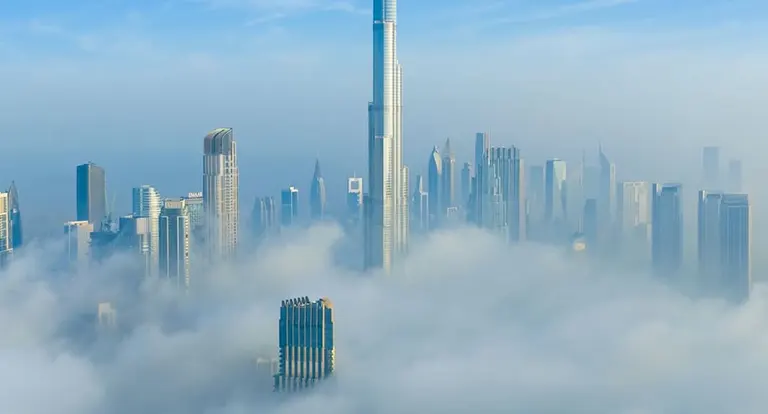
Dubai is still the UAE’s most active and internationally visible real estate market. According to CBRE’s Q4 2025 market review, Dubai’s residential sector showed signs of moderation in some locations, especially in quarterly rental movement, but the overall market remained resilient. That moderation should not be confused with weakness. It is better described as a shift from rapid overheating toward a more normal pace of growth.
Dubai’s rental sector was particularly strong through 2025. Dubai Land Department said registered tenancy contracts rose 6% year on year in volume and 17% in value, reaching 1.38 million contracts worth AED 126.4 billion. New tenancy contracts increased by 10%, while renewed contracts also rose, which points to both fresh demand and resident retention. For landlords, this confirms that the rental market remains one of the strongest pillars of Dubai real estate in 2026.
Sales activity was also robust. Dubai Land Department said sold units increased by 25% to 147,500 units in 2025, with total sales value reaching AED 280 billion, up 30% in value. Completed projects rose to 124, while projects under construction climbed 25% to 937. These numbers show a market that is still active on both the transaction side and the development side.
Abu Dhabi real estate market: deeper, steadier, and increasingly important
Abu Dhabi is becoming a bigger part of the UAE property conversation. CBRE said Abu Dhabi saw a 50% annual surge in transaction volumes in the Q4 2025 period, with the off-plan segment dominating activity. This suggests the capital is not only benefiting from end-user demand, but also from rising investor confidence in long-term community development and quality infrastructure.
Compared with Dubai, Abu Dhabi is often seen as more measured and less speculative. That positioning is attractive for buyers looking for stability, larger-format homes, and institutional-grade urban planning. In 2026, Abu Dhabi looks especially relevant for investors focused on family communities, premium waterfront schemes, and longer-hold strategies rather than very short-term flipping.
Ras Al Khaimah: the UAE market’s emerging high-growth niche
Ras Al Khaimah remains smaller than Dubai and Abu Dhabi, but its trajectory is hard to ignore. CBRE reported that residential prices in RAK rose 39% year on year in Q1 2025, with more than AED 2.4 billion in off-plan sales recorded. Luxury and branded residences, particularly around Al Marjan Island, have been major drivers.
For investors, RAK is no longer just a secondary leisure market. It is becoming a strategic lifestyle and hospitality-led real estate story. That does not mean risk is absent. It means the market is earlier in its cycle, and that can create both stronger upside and sharper volatility depending on supply timing and buyer profile.
What is happening with prices and rents right now?
Across the UAE, the broad direction remains upward, but the pace is becoming more segmented by location, product type, and budget band. Prime villas, branded residences, beachfront assets, and limited-supply communities are still outperforming. In contrast, some mainstream apartment submarkets may start to see slower quarterly growth as more supply arrives.
CBRE noted that Dubai’s residential market may be transitioning toward a period of moderation and quarterly rental stabilization in some locations. That is an important signal for 2026. It means the market may continue growing year on year, while no longer rising at the same speed every quarter. For serious investors, this is usually healthier than unsustainably fast gains because it creates a more stable platform for financing, resale, and tenant retention.
The role of off-plan sales in the current market
Off-plan remains one of the defining features of the UAE market. It continues to attract domestic and international buyers because of flexible payment plans, lower entry pricing relative to completed stock, and strong developer branding. However, off-plan concentration also creates sensitivity. Reuters reported that off-plan deals made up 65% of Dubai transactions in 2025, highlighting how much of the market depends on confidence in future delivery and future demand.
This is why project selection matters more in 2026. Buyers should pay close attention to developer reputation, construction progress, handover timelines, service-charge assumptions, location depth, and exit demand. In a market where supply is building, not every off-plan launch will perform equally well.
Key risks in the UAE real estate market in 2026
The first risk is supply. Reuters noted that analysts were already warning that supply could outpace demographic growth in some parts of the market, with 300,000 to 400,000 new units expected in Dubai by 2028. If delivery pipelines accelerate too quickly, weaker projects and lower-quality locations may face pricing pressure.
The second risk is affordability. The IMF specifically flagged housing costs as a source of inflation pressure and a potential affordability concern. This matters because strong markets can still slow if local and expatriate residents feel ownership and rental costs are moving too far ahead of income growth.
The third risk is geopolitical volatility. In early March 2026, Reuters reported that regional conflict had begun testing investor sentiment and funding conditions, even as several developers argued that long-term GCC fundamentals remain intact. For now, this looks more like a confidence shock than a structural collapse, but it is still an important part of the current market picture.
UAE real estate outlook for buyers and investors
The 2026 outlook is still constructive, especially for well-located assets and trusted developers. Dubai remains attractive for liquidity, rental demand, and global investor access. Abu Dhabi is increasingly compelling for stability and long-hold positioning. Ras Al Khaimah offers a higher-growth, higher-variance opportunity, particularly in the luxury and branded segment.
The smartest strategy in the current market is not to chase every launch. It is to focus on quality. That means buying in established or strategically developing communities, understanding supply pipelines, prioritizing developer strength, and matching the asset to the intended hold period. End users should prioritize affordability, accessibility, and community quality. Investors should prioritize yield resilience, exit depth, and project credibility.
Final thoughts
So, what is the current situation in the UAE real estate market? The short answer is this: the market is still strong, but it is becoming more selective. Economic growth, non-oil expansion, high rental demand, and international capital continue to support the sector. At the same time, new supply, affordability pressure, and geopolitical uncertainty mean 2026 is a year for informed decisions rather than blind momentum.
For serious property buyers and investors, that is actually good news. More selective markets reward research, timing, and product quality. As highlighted in the UAE Real Estate Market Overview 2026, this evolving environment continues to position the UAE as one of the region’s most important and internationally relevant property markets.