
June 25, 2026
INSIGHTS · DUBAI REAL ESTATE
Off-Plan vs Ready Property
Dubai Buyer’s Guide
Off-Plan or Ready? The Dubai Property Decision That Defines Your Returns
When evaluating Off-Plan vs Ready Property Dubai, buyers are often faced with one of the most important decisions in their real estate journey. Yet many investors make their choice based on market sentiment, sales pitches, or assumptions rather than a careful assessment of costs, timelines, risks, and financial objectives. Both off-plan and ready properties can deliver excellent returns when aligned with the right strategy, but each comes with distinct advantages and considerations. This guide provides a clear, fact-based comparison to help you understand the differences, weigh the opportunities and risks, and determine which option best suits your investment goals and personal circumstances.
MARKET CONTEXT
Off-plan transactions accounted for 72.9% of all Dubai property deals in 2025, with total off-plan sales reaching AED 448.1 billion — up dramatically year-on-year. Yet ready property continues to dominate for income-focused buyers. Understanding why both remain relevant is the starting point for any serious decision.
Understanding the Two Categories
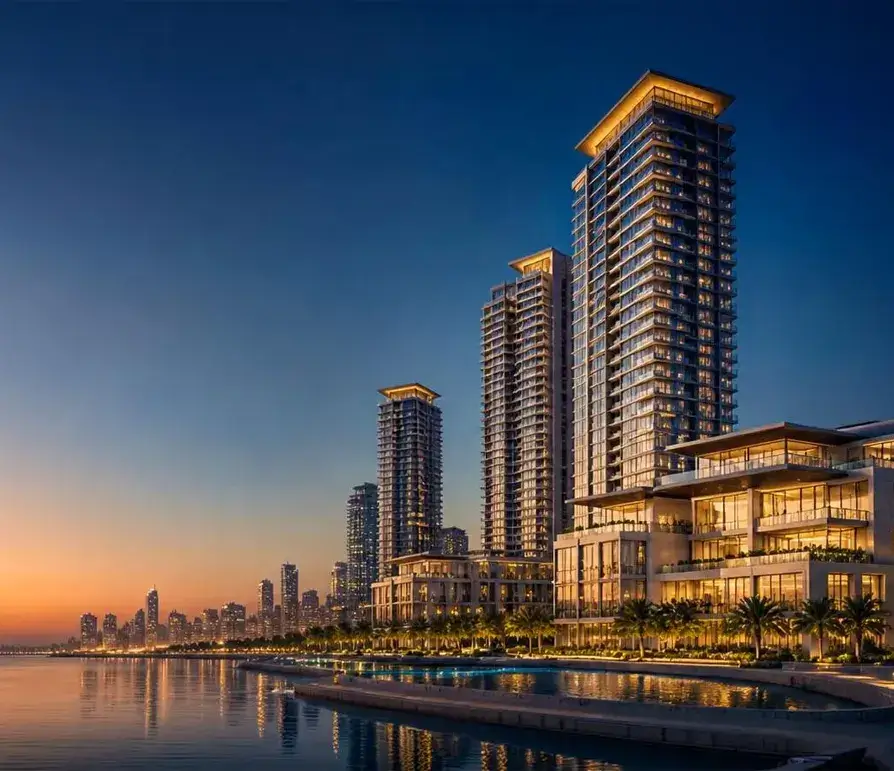
An off-plan property is purchased from a developer before the building is complete — sometimes before a single foundation pile has been driven. You buy based on architectural renders, floor plans, show apartments, and a developer’s track record. Payment is structured in installments tied to construction milestones, and you take possession only after handover, typically two to four years from purchase.
A ready property — also called a secondary market or resale property — is fully completed and available for immediate transfer. You can walk through it, check every fixture and finish, verify the view, and assess the building’s common areas before you sign. Transfer is completed in one transaction, either in full cash or via a UAE bank mortgage.
Both are legitimate investment vehicles. The question is not which is better in the abstract — it is which is better for your specific financial position, income requirements, and investment horizon.
The Case for Off-Plan
Lower Entry Price — and Real Upside at Handover
Developers price off-plan units below anticipated market value to attract early buyers and fund construction. In active submarkets across Dubai, early-stage buyers have historically seen capital appreciation of 20 to 40 percent by handover in well-chosen projects. The logic is straightforward: you lock in today’s price and benefit from demand-driven growth over the construction period. In a city where total property values have grown significantly since 2020, this has been a repeatable and well-documented return driver. Off-plan sales in Dubai recorded 43.70 percent year-on-year growth in 2024, according to the Dubai Land Department. That growth reflects both the price advantage and the genuine confidence investors have in the market’s trajectory.
Flexible Payment Plans — Spread Over Years
Most developers require only 10 to 20 percent on booking, with the balance spread across construction milestones. Many also offer post-handover payment plans that allow buyers to service remaining installments from rental income after taking possession. This kind of capital efficiency simply does not exist with ready properties. Some developers also absorb the 4 percent Dubai Land Department transfer fee as a launch incentive, reducing the initial cost burden further. For investors deploying capital across multiple assets, the installment structure allows portfolio diversification in a way that full-payment ready transactions do not.
First Access to the Best Units
Buying at launch gives you the entire inventory to choose from — preferred floors, specific views, corner units, and layouts that command rental premiums and resale uplifts later. By the time a project completes and units enter the ready market, the premium positions are almost always already sold or occupied. Buyers in the secondary market choose from what remains.
Built to Current Standards
New construction reflects today’s design expectations, energy efficiency regulations, and lifestyle infrastructure. Smart home systems, high-speed fiber connectivity, modern cooling specifications, and open-plan configurations are standard in developments launching now. Older ready buildings, however well-located, cannot be retrofitted to the same standard. For landlords and resellers, a brand-new product commands stronger rental premiums and a more liquid resale market.
Assignment Sales — Profit Without Collecting Keys
Once a buyer has paid a defined percentage of the purchase price (typically 30 to 40 percent), many developer contracts permit assignment of the unit to a new buyer before handover. In a rising market, this allows investors to crystallise a capital gain without ever taking possession, making off-plan a viable vehicle for short to medium-term return strategies without the friction of actual ownership and management.
The Risks of Off-Plan — Honestly Assessed
Construction Delays Are Not Rare
An estimated 40 to 50 percent of Dubai off-plan projects experience some form of handover delay — ranging from a few months to over two years. Dubai’s RERA regulations and mandated escrow account framework significantly reduce the risk of project failure or fund misappropriation, but delays remain a real and common occurrence. For buyers with personal timelines tied to a specific handover — school enrolments, visa plans, relocation schedules — this uncertainty must be factored into the decision. The mitigation is straightforward: buy from developers with a documented, verifiable track record of on-time delivery. Emaar, Nakheel, Meraas, and a handful of established private developers have strong completion histories. Smaller or newer names carry disproportionately higher risk regardless of their marketing.
No Income During Construction
You will receive zero rental income for the duration of the construction period, which typically runs two to four years. If your investment model depends on cash flow from the asset, off-plan creates a prolonged dead period where you are paying installments with no offsetting income. This requires either sufficient capital reserves or a structured financial plan that accounts for the gap.
Restricted Mortgage Access
UAE banks currently cap the loan-to-value ratio at 50 percent for off-plan purchases, compared to up to 80 percent for ready properties. Additionally, most bank approvals for off-plan projects require the development to have reached at least 40 percent completion. This means buyers relying on mortgage financing will find their options significantly constrained during the early stages of a project, and must have more equity available than a ready purchase would require.
The Delivered Product May Vary
Off-plan purchases are commitments made based on renderings, brochures, and show apartments. While established developers consistently deliver quality, there are documented cases of finishes falling short of marketing materials, view corridors being partially blocked by subsequent developments, or dimensions varying slightly from approved plans. The remedy is thorough due diligence: review the SPA carefully with a real estate lawyer, visit the developer’s completed projects before committing, and avoid purchasing from developers without a visible completed portfolio to inspect.
The Case for Ready Property
Rental Income from Day One — The moment transfer completes, you can list the unit. Dubai’s current gross rental yields average 6 to 8 percent for apartments, with studios in connected locations reaching 7 to 9 percent annually. For buyers who need the investment to work immediately — whether to support monthly expenses, service a mortgage, or build a cash-positive portfolio — ready property delivers what off-plan cannot for the first two to four years.
Complete Transparency Before You Commit — You walk through the actual unit. You see the ceiling height, the quality of finishes, the light at different times of day, the noise from the street below, and the condition of the lobby and shared amenities. There is no ambiguity and no reliance on a developer’s representation.
Stronger Mortgage Access — Resident buyers can access LTV ratios of up to 80 percent on ready properties from UAE banks, making the effective down payment significantly lower in relative terms.
Zero Construction or Delivery Risk — The building exists. You can verify condition, service charges, and maintenance history before purchase. There is no construction uncertainty.
The Trade-offs of Ready Property
Higher Entry Price
Ready units are priced at current market value, often 10 to 30 percent higher than equivalent off-plan options in the same area.
Full Payment or Mortgage Required
There are no installment plans; payment or mortgage begins immediately at transfer.
Older Stock Costs
Service charges and maintenance costs may be higher in older buildings, affecting net yield.
Limited Unit Choice
Buyers choose from available listings only, with premium units often already occupied or priced at a premium.
Side-by-Side Comparison
| Factor | Off-Plan | Ready Property |
|---|---|---|
| Entry Price | 10–30% below market | Current market value |
| Payment Structure | Installments over 2–5 yrs | Full payment at transfer |
| Rental Income | After handover (2–4 yrs) | Immediate from day one |
| Mortgage LTV | Up to 50% | Up to 80% |
| Capital Growth Potential | High (pre-handover upside) | Moderate (already priced in) |
| Construction Risk | Delay risk (40–50%) | None — building exists |
| Unit Selection | Full inventory at launch | Limited to listed stock |
| Inspect Before Buying | No — based on plans | Yes — full physical walk |
How to Make the Right Decision for Your Situation
Start With Your Investment Timeline
Off-plan suits buyers with a horizon of three to seven years who can absorb installments and wait for completion before income or capital gains are realised. Ready property suits buyers who need income now, plan to use the property personally within a short timeframe, or are building a portfolio where cash flow is a near-term requirement.
Assess Your Cash Flow Position Honestly
If paying off-plan installments over several years while receiving no rental income creates financial stress, the capital upside potential does not justify the risk to your stability. Sound investment decisions are never made at the expense of personal financial security. If your cash position allows for installments and a waiting period without pressure, off-plan becomes significantly more attractive.
Research the Developer, Not Just the Project
For off-plan, the developer’s track record is the single most important risk filter. Research completed projects, visit delivered buildings, check DLD records for delays, and verify escrow registration and RERA status. A strong render and attractive payment plan mean little without proven delivery capability.
Location Matters More Than Property Type
Both off-plan and ready properties reward strategic location selection. Proximity to metro connectivity, business districts, healthcare, schooling, and retail infrastructure drives rental demand and long-term value more than property age or payment structure.
HAUS 51 Perspective
We work exclusively in Dubai’s off-plan market because we believe it offers the strongest combination of entry pricing, capital growth potential, and payment flexibility for investors who plan correctly. That said, the right answer for any individual buyer depends on their specific timeline, income needs, and risk tolerance — not on market trend headlines. We run the numbers with every client before making any recommendation.
A Note on Market Timing
Dubai’s current property cycle has been unusually strong. Off-plan sales grew 43.70 percent year-on-year in 2024, and total transactions exceeded 270,000 in 2025 — a 20 percent increase from the prior year. In this environment, off-plan buyers in well-chosen locations have recorded significant gains. However, no market appreciates indefinitely.
Buyers should always stress-test an off-plan investment against a scenario where prices flatten or correct before handover. If the unit still makes sense at flat growth — based on the payment structure, entry price, and projected rental yield — it is a sound investment. If the return only works in an optimistic scenario, the risk profile is being mispriced.
The best investment is not always the one with the highest ceiling. It is the one that does not expose you to unmanageable risk if conditions change.
Who Should Buy Off-Plan
- Investors seeking maximum capital appreciation over a 3–7 year horizon
- Buyers who need the flexibility of phased, installment-based payments
- Those entering the Dubai market at a lower price point than ready stock allows
- Portfolio investors diversifying across multiple units at launch-stage pricing
- Buyers comfortable with a waiting period before income or resale
Who Should Buy Ready
- Buyers who need immediate rental income from the asset
- Those purchasing a primary residence they plan to occupy soon
- Investors who rely on UAE bank mortgage financing at higher LTV ratios
- Buyers who prefer full physical inspection before committing
- Conservative investors who want zero construction or delivery risk

When comparing Off-Plan vs Ready Property Dubai, there is no single answer that suits every buyer or investor. Both options play an important role in a well-balanced real estate strategy. Off-plan properties offer lower entry prices, flexible payment plans, and the potential for significant capital appreciation over time, while ready properties provide immediate rental income, complete transparency, and greater access to mortgage financing. The right choice ultimately depends on your investment timeline, cash flow requirements, and appetite for risk. By carefully evaluating your financial goals and personal circumstances, the Off-Plan vs Ready Property Dubai decision becomes a strategic investment choice rather than one influenced solely by market trends or sales-driven marketing.
RELATED NEWS


Looking to Invest in Dubai’s Branded Residences?
Dubai is home to one of the world’s most vibrant branded residence markets, offering luxury properties associated with renowned hospitality, fashion, automotive, and lifestyle brands.
Whether you’re seeking a primary home, holiday retreat, rental investment, or ultra-luxury asset, HAUS 51 can help you explore Dubai’s top branded residences, compare opportunities, assess investment potential, and find the perfect property to match your lifestyle and long-term goals.
Contact HAUS 51 today for expert advice on Dubai’s top branded residences and discover premium investment opportunities in one of the world’s fastest-growing luxury real estate markets.
📞 +971 58 515 2888
🌐 www.haus51.com
Disclaimer
Information related to branded residences, including amenities, services, property prices, availability, rental programs, and lifestyle offerings, is provided for general guidance only and may change based on developer updates, brand partnerships, service charges, management decisions, and market conditions. Buyers, investors, and tenants should independently verify all details before making any property-related decisions.
📞 +971 58 515 2888 | 🌐 www.haus51.com